

This series started by asking what “SEO-ready” means when AI models, not just search engines, are reading a website. The honest answer for where this is heading in the next few years: the distinction between “website” and “AI-readable data source” is going to keep shrinking, and the Malaysian web design companies that build for that now will own the visibility gap over the ones still optimising for 2019’s Google alone.
Where AI Overviews and Chat Search Are Heading
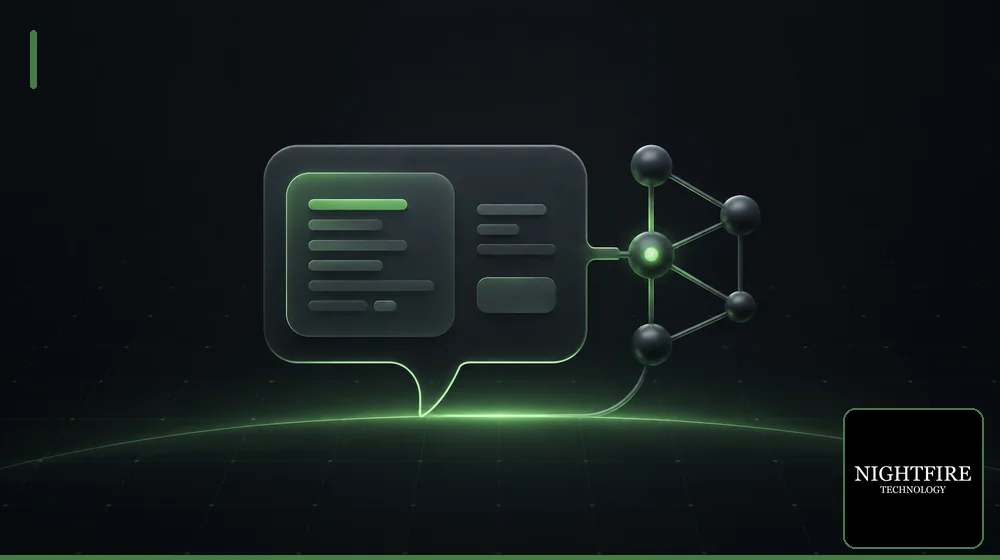
Google’s AI Overviews are expanding to cover more query types, and ChatGPT’s web search, Perplexity and Gemini are converging on the same behaviour: answer the question directly, cite two or three sources, and only send a click through when the user wants to go deeper. The click-through is no longer guaranteed — being the cited source is often the entire commercial outcome now, which changes what a website is actually for.
What This Means for How Websites Get Built
- Content as data, not just copy — every key fact structured so it can be extracted correctly, every time.
- Fewer, better pages — a smaller set of comprehensive, well-structured pages outperforms dozens of thin ones for AI citation.
- Ongoing technical maintenance — AI crawler behaviour changes; a site built AI-ready once still needs periodic re-auditing.
- Trust signals as infrastructure — reviews, schema and consistent business facts treated as core site architecture, not marketing add-ons.
What Doesn’t Change
None of this replaces the fundamentals a good web design Malaysia company has always delivered — a fast, well-structured, genuinely useful site built by people who understand both the business and the technology. AI-readiness is an additional layer on that foundation, not a replacement for it. Sites that were never well-built rarely become AI-ready with markup alone; the underlying quality still has to be there.
Positioning for 2026 and Beyond
| Business type | What matters most now | What to prioritise next |
|---|---|---|
| New Malaysian SME site | Build AI-ready from day one | Schema, clean structure, crawler access baked in from launch |
| Existing site, good foundation | Targeted AI-SEO add-on | Schema rollout, content restructuring, crawler audit |
| Existing site, weak foundation | Fix fundamentals first | Speed, hosting and structure before any AI-specific work |
Key Takeaways
- AI Overviews and chat search are reducing guaranteed click-throughs — citation is becoming the outcome that matters.
- Fewer, more comprehensive pages tend to outperform many thin ones for AI citation.
- AI-readiness builds on strong web design fundamentals, it doesn’t replace them.
- Where to start depends on whether the existing site’s foundation is strong or weak.
Are AI Overviews going to replace traditional search results?
They’re expanding to cover more query types alongside traditional results, with the practical effect that a growing share of searches get answered directly, with citations, rather than always sending a click to a website.
What should a Malaysian business look for in a web design company in 2026?
The same fundamentals as always — speed, clean structure and genuine usefulness — plus explicit AI-readiness: schema markup, crawler access and content built to be extracted correctly by AI search tools.
Can an older, weaker website ever become properly AI-ready?
Only if the underlying foundation — speed, hosting, and basic structure — is fixed first. Schema markup and AI-SEO add-ons improve a solid site significantly more than they can rescue a fundamentally weak one.
Ready to build for where search is actually heading? This closes our series on what a SEO-ready website Malaysia needs in 2026.
See our full range of services, our transparent pricing, or get in touch with Nightfire Technology to start building for what’s next.


Albert Tung Chun Yee
Albert Tung Chun Yee is a Malaysian-based Web Developer, Senior Technical SEO Specialist, and Marketing Consultant. Based out of Batu Caves, Selangor, he actively builds, optimizes, and scales digital platforms to drive traffic and revenue