

“Mobile-first” became a fixed rule years ago: build for the phone screen first, desktop second. That rule still holds — but in 2026 it’s no longer the finish line. A growing share of traffic now arrives through voice queries, AI assistants reading a page aloud, and chat interfaces summarising a site before a human ever taps a link. A site can be perfectly responsive and still fail this newer, quieter test.
What “Assistant-Ready” Adds on Top of Mobile-First
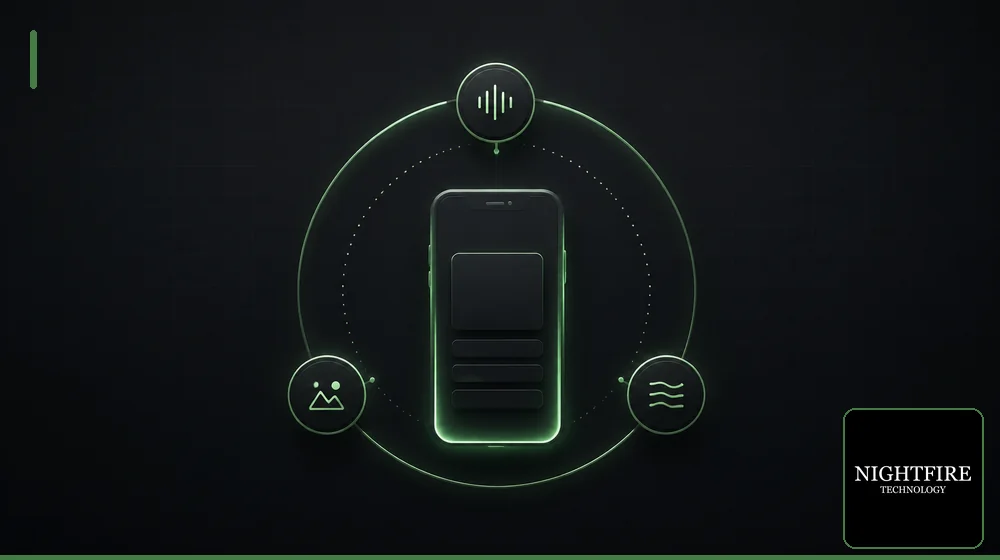
Mobile-first optimises for a screen. Assistant-ready optimises for a system reading the page on someone’s behalf — Siri, Google Assistant, or a chatbot summarising your services page in a customer’s messaging app. That requires content that makes sense read aloud or extracted out of visual context: clear, self-contained sentences, explicit business facts (hours, pricing, location) rather than implied ones, and no critical information hidden inside images or JavaScript-only interactions.
Where Malaysian SME Sites Typically Fail This
- Pricing hidden in a PDF or image — unreadable to both AI assistants and mobile users on slow connections.
- Contact details only in a footer image or map widget — invisible to anything that isn’t rendering the page visually.
- Navigation-dependent information — facts that require three clicks to reach are effectively unreachable to a system summarising in seconds.
- Tap targets and forms that assume a mouse — still common on sites “converted” to mobile rather than designed for it.
What Fixing This Costs
| Fix scope | Typical cost (Malaysia, 2026) | Includes |
|---|---|---|
| Content audit + rewrite | RM600–RM1,800 | Un-hide key facts, rewrite for extractability |
| Mobile UX overhaul | RM1,500–RM4,000 | Tap targets, forms, navigation depth fixes |
| Full assistant-ready redesign | RM4,000–RM10,000 | Both of the above plus schema and structure |
Testing Your Own Site
A quick real-world test: ask a voice assistant or an AI chatbot to summarise your business hours, pricing and location from your own website URL. If it gets any of them wrong or says it can’t find them, that’s the exact gap this audit closes — not a hypothetical risk, a checkable one, in under two minutes.
Key Takeaways
- Mobile-first is necessary but no longer sufficient on its own.
- Assistant-ready means facts are extractable, not just visually present.
- Hidden pricing, footer-only contact info and deep navigation are the most common failures.
- Test it yourself: ask an AI assistant to summarise your own site’s key facts.
Is mobile-first web design the same as being AI-assistant-ready?
No. Mobile-first optimises for screen size and touch input. Assistant-ready optimises for a system extracting and summarising facts on a user’s behalf, which requires explicit, self-contained content rather than just responsive layout.
How can I test if my website is AI-assistant-ready?
Ask a voice assistant or AI chatbot to summarise your business hours, pricing and location using your website URL. If it gets facts wrong or can’t find them, key information is likely hidden in images, PDFs or deep navigation.
What does it cost to fix an assistant-readiness gap?
A content audit and rewrite to un-hide key facts typically costs RM600–RM1,800 in Malaysia. A full assistant-ready redesign including schema and structure runs RM4,000–RM10,000 depending on scope.
Curious how your site performs on this test? This continues our series on what a genuinely SEO-ready website Malaysia needs in 2026.
See our full range of services, our transparent pricing, or get in touch with Nightfire Technology for an assistant-readiness audit.


Albert Tung Chun Yee
Albert Tung Chun Yee is a Malaysian-based Web Developer, Senior Technical SEO Specialist, and Marketing Consultant. Based out of Batu Caves, Selangor, he actively builds, optimizes, and scales digital platforms to drive traffic and revenue